
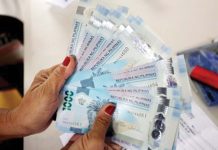



ILOILO City — The Bangko Sentral ng Pilipinas (BSP) has intensified its surveillance of the foreign exchange market amid mounting fears that the peso’s historic plunge to P64.17 against the United States dollar could drive up fuel prices, increase import costs and worsen inflationary pressures on Filipino households and businesses.
The peso’s continues depreciation has raised concerns over the rising cost of dollar-denominated imports, particularly crude oil, as well as the country’s external debt obligations, prompting monetary authorities to closely monitor currency movements and guard against excessive market volatility.
BSP Deputy Governor Zeno Ronald R. Abenoja, speaking during the Philippine Economic and Investment Briefing in Iloilo City on Nov. 6, assured the public that the central bank was taking steps to maintain orderly foreign exchange trading and protect the economy from potential shocks.
“We in the BSP are closely monitoring what is happening in the foreign exchange market. We want the foreign exchange market to experience orderly conditions. We want the market to be able to serve the requirements of our growing economy,” Abenoja said.
The peso breached the P64-per-dollar threshold for the first time on Oct. 27, 2026, marking a historic low for the Philippine currency.
Its continued weakness has heightened concerns that imported inflation could further erode consumers’ purchasing power, particularly as businesses face higher costs for fuel, raw materials and other imported goods.
A weaker peso means more pesos are needed to purchase the same amount of dollar-priced commodities, potentially translating into higher transportation, production and retail costs.
Abenoja acknowledged that the BSP was closely watching these risks, including their possible impact on debt servicing and consumer prices.
“That’s one of our main goals. At the same time, we are also watchful for any impact that could arise including debts, exchange rate—these are one of those many things we monitor, as possible sources of our inflation pressures,” Abenoja explained.
Dollar inflows provide cushion
Despite the peso’s steep depreciation, Abenoja maintained that the Philippines has financial buffers that could help stabilize the foreign exchange market.
These include the country’s gross international reserves, continued remittances from overseas Filipino workers (OFWs), and foreign currency earnings from the business process outsourcing (BPO) industry.
International reserves provide a cushion against external financial shocks, while remittances and BPO revenues help sustain the supply of US dollars in the domestic market.
Although remittance growth has slowed, Abenoja emphasized that overseas Filipino workers continue to provide a steady stream of foreign currency.
Marcos urges calm amid peso slump
The currency’s historic decline has also drawn reactions from Malacañang and criticism from progressive groups concerned about its potential impact on the cost of living.
President Ferdinand Marcos Jr. urged Filipinos not to panic over the peso’s depreciation, attributing the currency’s weakness partly to global geopolitical developments and rising oil prices.
His remarks, however, drew criticism from the Bagong Alyansang Makabayan (BAYAN), which accused the administration of failing to present a concrete strategy to address the worsening economic situation.
The peso’s decline has persisted despite earlier aggressive interest rate increases by the BSP aimed at containing inflation and cushioning the economy against external pressures./PN