


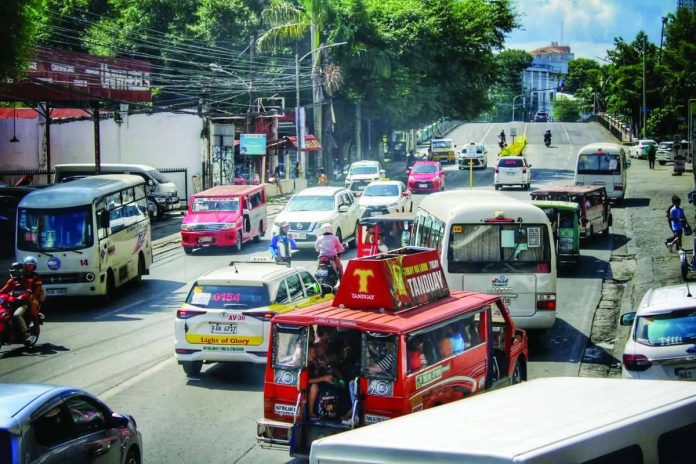
ILOILO City – The latest public transport fare increases are forcing commuters in Iloilo to stretch already tight household budgets, with low-income workers and parents warning that the additional transportation costs could leave them with less money for food, schooling and other daily necessities.
The new rates that took effect Monday, Sept. 28, raised minimum fares for both traditional and modern public utility jeepneys, adding another expense for commuters already grappling with rising prices of basic commodities.
For 52-year-old balut vendor Risa Jagonate of Barangay Ungka, Jaro district, the fare hike immediately increased her daily transportation budget from P40 to P50.
Jagonate travels every day to the Iloilo Terminal Market, commonly known as “Super”, to buy balut that she resells for a living. The additional P10 daily expense does not yet include the transportation allowance of her child, who is a student.
“Para sa amon nga mga pigado, tama gid kamahal ka plete kay ti adlaw-adlaw nagalakat ako, nagapangumpra. Imbes nga maka-kinot ka, indi na. Kinahanglan ma-budget-tan sang P50 kada adlaw sa pamasahe pa lang, waay pa labot inogbakal sang baligya,” Jagonate said.
She appealed to the national government to find ways to bring fares down.
“Pareho sa amon nga mga pigado, tama gid ka budlay kag huol gid sa adlaw-adlaw nga tanan,” she added.
Under the fare adjustment, the minimum fare for traditional public utility jeepneys increased by P1, from P13 to P14 for the first four kilometers, while the succeeding-kilometer rate rose from P1.80 to P2.
For modern jeepneys, the minimum fare climbed by P2, from P15 to P17 for the first four kilometers, while the succeeding-kilometer rate increased from P2.20 to P2.40.
The same concern was raised by 53-year-old Marivic Pastolero of Barangay Balabago, Jaro, whose family must shoulder the daily transportation expenses of a student.
“Iloy ako sang panimalay, may estudyante kami. Apektado gid ang amon budget sa kada adlaw. Kag sa amon kabataan, instead ibakal nila pagkaon, ipamasahe pa, kay ti indi isa lang ka sakay. Sa isa ka adlaw, madamo ang ila biyahe,” Pastolero said.
While she acknowledged that higher fuel prices contributed to the fare adjustment, Pastolero urged the government to introduce interventions “para maka-reduce kag makabulig sa mga ordinary nga mga Filipino pareho sa amon.”
Pastolero said her family would have to work even harder to ensure that her child could continue attending college despite the higher transportation expenses.
“Doble na gid ang pagkayod. Wala na ‘ni tulogay. Kinahanglan may extra gid kita kay sambot gid. Indi gid masarangan,” she said.
Construction worker Andrew Duero of Cabatuan, Iloilo faces an even heavier burden because three of his children commute to school daily while he also takes a jeepney to work.
“Dapat gamay lang daad saka ya eh. Siempre waay ta man kwarta. Construction worker man lang ako kag indi man gid daku ang sweldo,” Duero said.
He also fears the transport fare increases could compound the impact of rising commodity prices on low-income households.
“Mahagan-hagan lang daad ang pamasahe kay sige man saka sang balaklon. Ako bilang construction worker, kon buhinan na sang plete ko asta sang plete sang akon mga kabataan, wala na ako bilin. Indi na makaigu para sa pagkaon sang akon pamilya,” he added.
Transport Network Vehicle Service rates also increased. The base fare for sedans rose from P45 to P65; AUVs and SUVs, from P55 to P75; hatchbacks, from P33 to P55; and premium units, from P145 to P165. Pick-up fares are now P15 per kilometer.
Airport taxi fares for the first 500 meters increased from P75 to P115, while the existing P4 charges for every succeeding 300 meters and every two minutes remain unchanged.
Point-to-Point buses, meanwhile, are imposing a 15-percent increase based on existing fares on their respective routes.
UV Express services were granted provisional increases from P2.40 to P2.60 per kilometer for traditional units and from P2.50 to P3 per kilometer for modern units.
Provisional taxi flag-down rates were set at P65 for regular taxis, P80 for Premium Silver Taxi Service and P95 for Premium Gold Taxi Service.
For Santa Barbara, Iloilo resident Cecil Simbron, a caregiver working in Jaro district, commuters have little choice but to adjust their budgets because the Land Transportation Franchising and Regulatory Board (LTFRB) has already approved the higher fares.
“Na-intindihan ko man, no choice man kita kay kon gusto sang gobyerno naton, sa gusto ta kag indi masunod man kita gihapon. Masaka kag indi, amo man gihapon. Wala man kita mahimu,” Simbron said.
Simbron acknowledged that rising diesel and gasoline prices have also hurt public transport operators. But she appealed for a corresponding increase in the wages of private-sector workers to help offset their higher transportation expenses.
The provisional adjustments for UV Express and taxis will remain temporary while the LTFRB completes proceedings and evaluations for their final fare adjustments./PN