


ILOILO – A proposed two-month ban on the entry of live hogs and pork from outside Iloilo Province could put its Christmas-season meat supply and consumer prices under scrutiny. The province remains dependent on external sources for nearly 13 percent of its pork requirements.
The concern emerges from the Sangguniang Panlalawigan’s unanimous approval of a resolution urging the Department of Agriculture (DA) to evaluate a temporary restriction on incoming live hogs and pork from November 1 to December 31, 2026, primarily to protect local backyard raisers from declining farmgate prices and stiff market competition.
The Provincial Veterinarian’s Office (OPVet) data showed that Iloilo’s swine supply sufficiency stood at only 87.21 percent as of October, indicating that local production has yet to fully meet the province’s requirements.
The province recorded a swine population of 136,770 heads, comprising 111,890 backyard-raised hogs and 24,880 commercially raised animals.
Despite this supply gap, Provincial Board Member Rolito Cajilig, who sponsored the resolution approved on October 15, argued that the continued influx of hogs from neighboring provinces threatens the livelihood of small-scale producers already burdened by high production costs.
Shipment records showed that 19,775 live hogs entered Iloilo from Guimaras, Negros Occidental, Palawan and Antique between July 21 and September 30, 2026.
Another 2,625 hogs were recorded entering the province in October, bringing the documented arrivals to 22,400 heads over the reporting periods.
The volume has raised concerns among provincial legislators about the possible impact of outside competition on the selling prices of locally raised hogs, particularly those produced by backyard farmers with limited capital and bargaining power.
“Backyard hog raisers continue to shoulder substantial production costs and may incur losses when the selling prices of their animals are insufficient to recover their investments, while competition from incoming live hogs and pork may further limit their market opportunities and bargaining power,” Cajilig said.
Farmgate-retail price gap
Compounding the issue is the considerable disparity between the prices received by hog raisers and those paid by consumers.
Based on OPVet’s October 13 monitoring report, live hog prices across Iloilo ranged from P130 to P170 per kilogram, averaging P150.
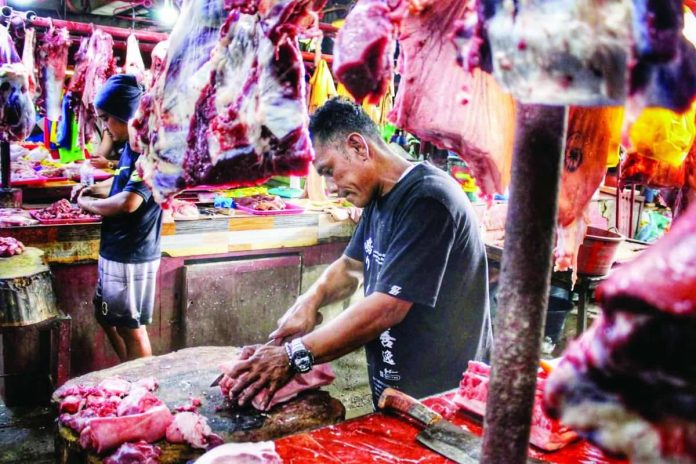
Meanwhile, pork sold in public markets and roadside stalls fetched between P220 and P340 per kilogram, with an average of P280.
The P130 difference between the average live-weight farmgate price and the average retail pork price underscores the need to examine the distribution and marketing system, although the figures are not directly comparable because live hogs and retail meat differ in weight, processing costs and market value.
The proposed restriction is intended to give local raisers greater opportunities to sell their animals at sustainable prices during the Christmas and year-end season, when demand for pork traditionally increases.
“The continued viability of local hog raisers is essential to the long-term food security and economic stability of the province, as the loss of local producers may increase the province’s dependence on supplies from outside its territorial jurisdiction,” the resolution stated.
Cajilig maintained that protecting the local swine industry is essential to preventing backyard farmers from abandoning hog production because of mounting financial losses.
“In view of the reported swine supply sufficiency level of 87.21%, the substantial volume of incoming live hogs, and the prevailing farmgate prices, a two-month temporary ban, from November 1 to December 31, 2026, on the entry into the territorial jurisdiction of the province of live hogs and pork originating from outside the province is proposed to provide local hog raisers with greater market opportunities and help stabilize farmgate prices,” Cajilig added.
Consumer protection remains crucial
However, the proposed restriction also presents a policy challenge for the DA: determining whether limiting incoming supplies would sufficiently benefit local producers without adversely affecting pork availability and affordability during the holiday season.
With local production still below the province’s total requirements, the effect of any restriction on market supply would need careful evaluation.
The Provincial Board, headed by Vice Gov. Nathalie Ann Debuque, acknowledged this concern by asking the DA to assess the proposal’s feasibility, legal basis and appropriate scope before any restriction is implemented.
The assessment must consider local swine inventory, supply sufficiency, incoming shipments, slaughter requirements, market demand, and prevailing farmgate and retail prices.
It must also take into account the availability and affordability of pork for consumers.
Cajilig clarified that the proposed ban would apply exclusively within Iloilo Province and would remain subject to applicable laws and regulations, including animal quarantine, meat inspection, food safety and African Swine Fever prevention and control requirements.
The DA and other competent national government agencies would determine the legal authority, scope and implementation of any restriction.
Meanwhile, the Provincial Board requested the OPVet and Provincial Agriculture Office to monitor incoming shipments, swine inventory, slaughter volumes, farmgate and retail prices, and pork availability and affordability from November 1 to December 31.
The offices were also directed to submit a report to the Provincial Board on their findings.
The proposed ban has not yet been implemented, and its eventual adoption will depend on the DA’s assessment and the applicable legal requirements./PN