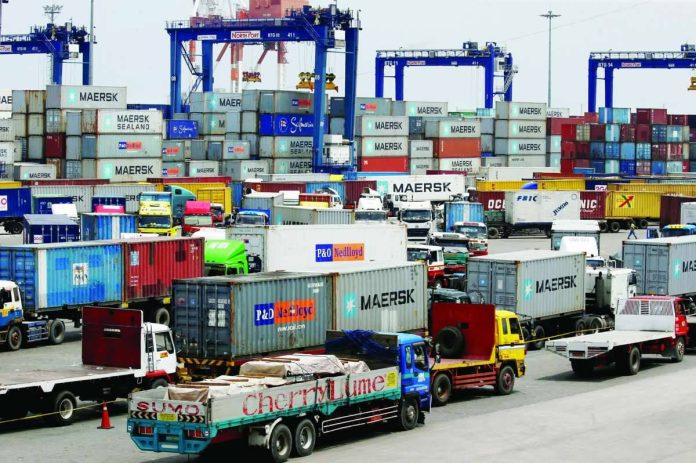
PHILIPPINE ports will need to ramp up capacity and improve efficiency to handle an anticipated increase in cargo once the country’s landmark free trade agreement (FTA) with the European Union takes effect.
That is according to Port of Antwerp-Bruges International (PoABI), the investment arm of one of Europe’s largest ports. The group said it is prepared to help the Philippines ready its maritime infrastructure for greater trade flows.
“The FTA, it’s a great momentum, so we have to enjoy that because it will boost cargo flows between our two nations and with the European Union as a whole. But we need to prepare for that,” PoABI head of business development Maartje Driessens said.
Driessens added: “If we wanted to ensure a smooth supply chain, it’s important that the goods can easily get from A to B. So ports have to be increased in terms of capacity, and the ports have to prepare to receive and import and export large volumes.”
Last week, the Philippines and the EU reached a “substantial conclusion” in negotiations for an FTA, which is expected to cover 94 percent of tariff lines and about 97 percent of bilateral trade.
About $12 billion in export potential is expected to be unlocked with the FTA, the Department of Trade and Industry had said.
The FTA would also mark an upgrade from the Philippines’ current trade arrangement under the EU’s Generalized Scheme of Preferences Plus, which grants preferential market access to more than 6,000 Philippine product lines.
Even ahead of the FTA, the EU was already one of the Philippines’ largest trading partners, accounting for 8.3 percent of the country’s total trade in goods in 2025. The Philippines, meanwhile, ranked as the EU’s 38th-largest trading partner.
Bilateral trade in goods between the Philippines and the EU reached 17.6 billion euros (about $20 billion) in 2025.
PoABI recently signed a five-year memorandum of understanding with the Philippine Ports Authority, or PPA, covering cooperation in port planning and optimization, digitalization, sustainability, safety and capacity building. (Logan Kal-El M. Zapanta © Philippine Daily Inquirer)