



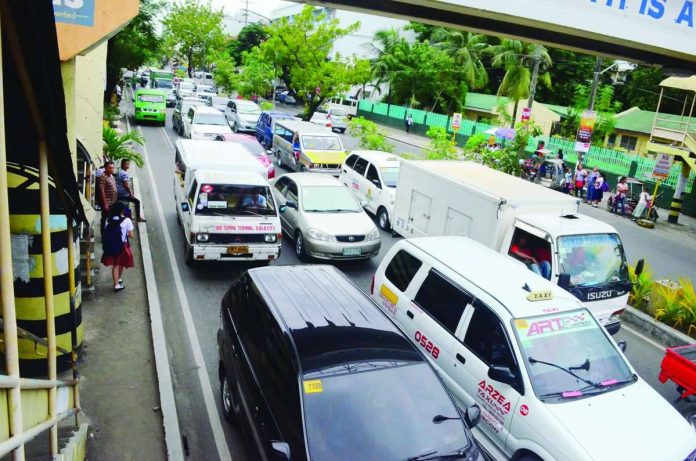
ILOILO City – The campaign to restore order on city streets resulted in the apprehension of 23,521 traffic violators in 962 enforcement and road-clearing operations during the first year of Mayor Raisa Treñas’ administration.
The figures showed the scale of traffic violations and recurring road obstructions confronting the city as authorities stepped up enforcement to improve road safety, ease congestion and keep streets and sidewalks accessible.
The Transportation and Traffic Management Office (TTMO) conducted 491 traffic enforcement and road-clearing operations, while the Public Order and Safety Management Office (POSMO) carried out 471 additional clearing operations across the city.
TTMO and POSMO chief Retired Police Colonel Uldarico Garbanzos said the campaign was aimed not only at penalizing violators but also at building greater discipline among road users and establishments.
“Motorists, pedestrians, and business owners share the responsibility of keeping our roads safe and orderly,” Garbanzos said.
More than 450 traffic enforcers also underwent capability-building and skills enhancement programs over the past year to improve their traffic management, public service and enforcement competencies.
Garbanzos said well-trained personnel are crucial as the volume of vehicles using the city’s roads continues to grow.
“They need to be equipped with the knowledge, skills, and proper attitude to effectively manage traffic and respond professionally to different situations on the road,” he said.
Beyond enforcement, POSMO conducted 77 community engagement activities, including advocacy campaigns in schools on road safety, responsible use of public spaces and compliance with city ordinances.
Personnel from the Special Services Division, Task Force on Anti-Squatting and Illegal Structures, Green Guards and Police Auxiliaries participated in the road-clearing operations.
Garbanzos stressed that road obstructions tend to return when enforcement becomes inconsistent, making sustained operations and public cooperation essential.
“Road clearing is not a one-time activity. It requires sustained implementation because obstructions eventually return if regulations are not consistently enforced. At the same time, we need the cooperation of the public because compliance cannot rely solely on enforcement,” he said./PN