


ILOILO City – Iloilo Province has confirmed an African Swine Fever (ASF) case in a hog farm in Barotac Viejo town, prompting veterinary authorities to tighten biosecurity measures, monitor hog movements, and remind raisers that the highly contagious swine disease can spread through infected pigs, pork products, contaminated feed, vehicles, equipment, and even people carrying the virus.
Provincial Veterinarian Dr. Darel Tabuada said four specimens taken from pigs owned by a hog raiser in Barotac Viejo tested positive for ASF at the Regional Animal Disease Diagnostic Laboratory (RADDL).
“On Tuesday, early in the morning, we received the result sang aton gin-send nga samples,” Tabuada told Panay News.
ASF is a severe viral disease affecting domestic and wild pigs. It does not infect humans, but it is highly fatal to pigs and can devastate backyard and commercial hog farms.
The disease may cause high fever, weakness, loss of appetite, red or blotchy skin, vomiting, diarrhea, difficulty breathing, abortion in pregnant sows, sudden death, and mass pig deaths.
The virus can spread through direct contact with infected pigs or carcasses; feeding pigs with contaminated food scraps; exposure to infected pork products; and contaminated clothing, footwear, vehicles, farm tools, slaughterhouse equipment, and transport cages.
Authorities said strict biosecurity remains the most effective protection, including limiting visitors, disinfecting facilities and vehicles, avoiding swill feeding, isolating sick pigs, reporting suspicious deaths, and securing proper transport documents.
The specimens in Barotac Viejo were collected after Mayor Nielo Tupas requested the Office of the Provincial Veterinarian (OPVet) assistance following a report from a hog raiser, coursed through the Municipal Agriculture Office, that several pigs were showing signs possibly linked to ASF.
Tabuada said OPVet technicians immediately instructed the raiser to contain the animals within the area while the office monitored developments.
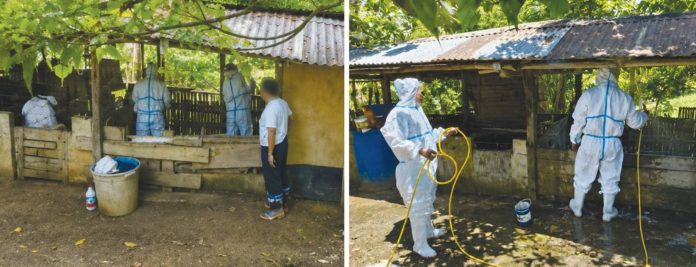
Days after the samples were collected, OPVet received a report that a sow and four piglets had died. The farm owner disinfected the pigpen and buried the dead animals.
“The owner is very cooperative. Tanan nga advise naton ginsunod gid niya, proper disposal and disinfection. Ang aton team nag-conduct man sang disinfection didto sa area and case investigation sa palibot. The area is isolated, sa tunga sang kamaisan. Gin-monitor naton ang mga palibot kag (so far) wala sang reported cases,” Tabuada said.
As of this writing, OPVet has not received reports of additional pig deaths in the affected barangay, but monitoring continues.
Tabuada said one possible reason the virus entered the farm was weak biosecurity practice.
Although the area is isolated and located in the middle of a cornfield, people still moved in and out of the compound, he noted.
Under the new protocol, OPVet will no longer automatically depopulate all pigs within a one-kilometer radius of an infected farm. Instead, action will be limited to the infected farm while surrounding areas will be monitored.
“Ang aton approach is individual farms na. So, kon diin ang infected farms didto lang kami ma-action. Didto lang kami ma-execute sang protocols such as proper disposal, depopulation, cleaning and disinfection sang palibot. We will monitor. Pero in terms of depopulation, wala na kita sang depopulation procedure,” Tabuada explained.
With one confirmed case, Tabuada said the ASF situation in Iloilo Province remains manageable.
“Wala sang other cases didto sa barangay, and ang gina-obra na lang naton is to strengthen and monitor,” he said.
OPVet has coordinated with municipal agriculture offices to monitor hog movements across the province. Hog raisers must secure an animal health certificate, local transport permit, and disinfection certificate for transported pigs, especially during checkpoints, slaughterhouse entry, and random inspections.
Tabuada also disclosed that OPVet is awaiting the results of specimens collected from another undisclosed municipality. While waiting for confirmation, authorities have already cordoned off the area and stopped hog movement there.
“Sa aton hog raisers, indi gid kita mag-panic. Isolated case ang didto sa Barotac Viejo kag it was contained. Ang aton gina-obra is monitor kon may spillover sang virus but so far since Friday last week asta subong wala kita sang nakita nga spread sang diseases sa barangays, buot hambalon controlled ang situation sa Barotac Viejo,” Tabuada said.
He urged hog raisers to strictly observe biosecurity measures, including restricting entry of people into pigpens, disinfecting regularly, avoiding the feeding of fresh grass or unsafe feeds, and immediately reporting suspected ASF symptoms or pig deaths.
Tabuada said ASF cannot be totally eliminated because the virus can survive for long periods, including in frozen pork products, making prevention and strict farm discipline critical./PN