



MANILA — The impeachment case against Vice President Sara Duterte-Carpio moved into a critical evidentiary phase on Thursday.
The Bureau of Internal Revenue (BIR) turned over her income tax records to the Senate impeachment court, complying with a subpoena that seeks to scrutinize her financial background alongside expected bank and Anti-Money Laundering Council (AMLC) documents.
The BIR transmitted the records after obtaining the required approval from President Ferdinand “Bongbong” Marcos Jr., as mandated under Section 71 of the National Internal Revenue Code.
Also submitted were the income tax records of Duterte-Carpio’s husband, lawyer Manases “Mans” Carpio, and companies linked to the couple.
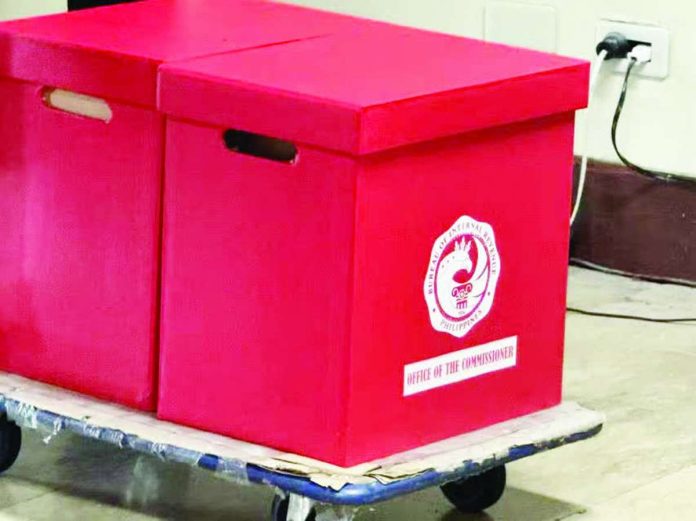
The documents – contained in two red boxes – form part of the impeachment court’s order directing the production of Duterte-Carpio’s tax, banking and AMLC records, which prosecutors said are necessary to determine whether the Vice President accumulated assets allegedly disproportionate to her declared lawful income.
According to the Senate, the records are now being inventoried and processed before copies are furnished to both the prosecution and defense panels.
Senate impeachment court presiding officer Francis Escudero earlier emphasized that the subpoena was issued solely to establish Duterte-Carpio’s financial capacity and background, not to investigate alleged offenses outside the Articles of Impeachment.
“The Court likewise holds that the requested records are sought to establish the Respondent’s financial baseline and capacity, and not to inquire into or prosecute alleged impeachable acts occurring outside the present Articles of Impeachment,” Escudero said.
Escudero cited the impeachment trial of former Chief Justice Renato Corona as precedent, noting that financial documents predating Corona’s appointment were admitted to provide a comparative financial picture.
“Likewise evidence and testimony concerning properties and transactions before his appointment as Associate Justice were presented before the Court on March 13, 2012,” Escudero said.
He added that records covering the period from 2007 to 2021 would be admissible only for that limited purpose.
“Therefore, the production of records from 2007 to 2021 is therefore allowed and authorized strictly for purposes of establishing a comparative baseline. They shall not be used as proof of another independent impeachable offense.”
Escudero also underscored that the subpoena does not automatically make the documents evidence in the impeachment proceedings.
“The issuance of a subpoena is merely a preliminary procedural step and does not, by itself, authorize the disclosure, inspection, or admission of the requested tax records into evidence,” he said.
He noted that Duterte-Carpio’s legal team retains the right to challenge the relevance, authenticity, admissibility and other evidentiary issues involving the records during the appropriate stage of the impeachment trial.
The impeachment court is also expecting the submission of the Duterte-Carpio family’s bank records and AMLC documents later on Thursday, potentially completing the documentary evidence sought under the subpoena./PN