
ILOILO City – Panay Island could face a shortage in baseload power capacity by 2029, prompting the Department of Energy (DOE) to craft a comprehensive master plan aimed at averting supply gaps and enabling the island to operate independently during grid disruptions.
The emerging Panay Energy Masterplan will lay down short- and long-term programs covering power generation, transmission and distribution, as well as energy-efficiency initiatives tailored to the island’s needs.
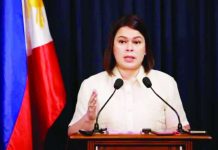
Engr. Camille Roxas, supervising science research specialist of the Power Generation Planning and Development Section under the DOE’s Electric Power Industry Management Bureau, said the plan was being developed upon the directive of Energy Secretary Sharon Garin, a native of Guimbal, Iloilo.
Roxas disclosed the initiative during the Visayas Power Forum titled “Powering Business Growth: Grid Reliability and Electricity Price Outlook,” organized by MORE Electric and Power Corp. on Aug. 5.
The forum gathered representatives from the business and energy sectors, as well as members of the media.
Roxas said Panay’s location at the far end of the Visayas transmission network makes it highly vulnerable to power disruptions. The island is not yet interconnected with Mindoro and Luzon, limiting its access to electricity that could be transferred from other grids during emergencies.
“The Panay Energy Masterplan will establish ‘yung comprehensive development road map, not only the transmissions but also the generations, the distributions to strengthen sub-grid reliability and resilience, and long-term energy security po ng ating country, especially the Panay region. Ang key objective po nito is ma-achieve ang sufficient generation capacity within Panay, ma-enhance ang inter-island power transfer capability, and enable Panay to support neighboring sub-grids during contingencies and natural disaster. And kung mag-island mode po kung sakaling may disconnection sa ibang sub-grid, kaya po ninyo mag-stand alone,” explained Roxas.
The master plan will also address system reliability concerns through a balanced portfolio of generation, transmission and demand-side interventions.
“Ito po ‘yung development pathway na ma-ensure po namin na ma-implement in timely manner to support po ‘yung forecast demand growth,” Roxas added.
An initial DOE study indicated the possibility of a baseload capacity shortage in Panay three years from now. The agency is thus assessing whether additional baseload-generating facilities must be established on the island.
Among the facilities expected to provide additional baseload capacity is Unit 3 of Panay Energy Development Corp.’s power plant in La Paz district, Iloilo City, provided it begins operating on schedule.
Roxas said Garin could present the master plan to the governors of Panay during a convention or meeting of the League of Governors of Panay Island.
No date has been set for its launch, however, and the proposal must still undergo consultation and review by stakeholders from the power distribution and transmission sectors.
DOE data showed that renewable energy accounts for 53.1 percent of the Visayas’ power-generation mix, followed by coal at 33.1 percent and oil-based sources at 13.8 percent.
As of June 30, 2026, private-sector committed power projects scheduled to come online in the Visayas from 2026 to 2031 were projected to add 4,300 megawatts of capacity.
Committed projects are already under construction or have reached the financial-closing stage.
Indicative projects, meanwhile, could contribute another 30,000 MW during the same period. These projects remain in the pre-development stage and have yet to secure financial closing from banks and other financial institutions.
To address persistent power alerts during afternoon and evening peak hours, the DOE directed the National Grid Corp. of the Philippines to undertake direct negotiations for an additional 270 MW of generation capacity for ancillary services. These services are needed to meet operating requirements and maintain grid frequency and voltage stability.
The agency is also pushing for a more diversified energy mix by accelerating committed projects and promoting investments in renewable energy and battery energy storage systems.
Its natural gas mid-merit auction seeks to procure additional gas-fired generating capacity to support the power system during periods of intermediate demand and provide operational flexibility.
To address delays caused by lengthy permitting, land acquisition and regulatory procedures, the DOE is streamlining approvals through the Energy Virtual One-Stop Shop and strengthening coordination through Task Force 200 and the Ad Hoc Committee on Transmission Projects.
The agency also identified limited and distant connection points for new power facilities as a major obstacle to grid readiness.
It called for the development of a Smart and Green Grid Plan through coordinated short-, medium- and long-term measures to establish a reliable, flexible, timely and future-ready transmission system. /PN