

ILOILO City — Western Visayas remains dangerously unprepared for major earthquakes and structural collapse emergencies due to a severe shortage of highly trained collapsed structure rescue personnel, with the Office of Civil Defense (OCD) Region 6 warning that most local government units still lack the specialized responders needed to save lives trapped beneath debris.
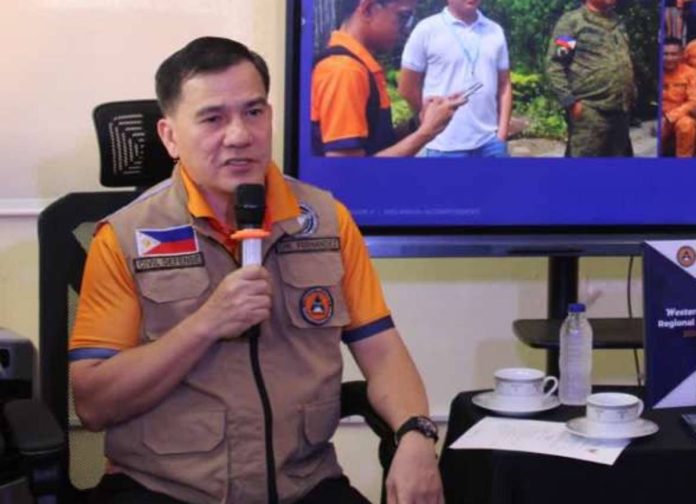
OCD-6 director Raul E. Fernandez said the region has already invested in rescue equipment, but the absence of adequately trained Collapsed Structure Search and Rescue (CSSR) teams remains a critical gap in disaster preparedness, particularly as earthquakes and structural failures pose potentially catastrophic risks.
“In terms of the equipment, bumili na po tayo ng equipment… we continue to procure sa lacking equipment and based po sa inventory sa capabilities ng government units, meron na din po silang ganong klaseng equipment, but the thing is, we still lack ‘yung mga skilled responders for collapsed structure search and rescue operations. So far kasi ang na-train natin dito, ‘yung Municipality of Pavia, San Jose, Antique… ‘yun ‘yung na-train natin,” Fernandez said.
CSSR is a specialized emergency response discipline that focuses on locating and rescuing victims trapped inside collapsed buildings after earthquakes, explosions, landslides, or other structural disasters.
Fernandez said the biggest obstacle preventing more local government units (LGUs) from developing CSSR capability is the high cost of training, with a single course requiring an investment of around P3 million because of specialized rescue equipment, technical instructors, and realistic structural-collapse simulations.
“P3 million just for one training, ganyan ka mahal ang training na ‘yan because they will be investing on the specialized equipment natin and they will be simulating ‘yung mga collapse structures,” Fernandez said.
“This training is not just about theoretical knowledge; it involves hands-on simulations of structural collapses that adhere to strict building codes and safety standards. The training also spans 14 days to encompass all necessary skills and knowledge,” he added.
According to Fernandez, many municipalities — particularly fourth-class and lower-income LGUs — cannot afford such training despite recognizing its importance.
“We are still catching up, need pa nating mag parami...that’s why we keep on encouraging our local government units to invest sa mga search and rescue equipment, training and capacity building,” Fernandez said.
He further cited another concern: “Because many LGUs hindi maka-afford, we in the OCD initiated na kami ang magko-conduct mag-train ng mga responders but may risk — we keep on training our people, and yet pag nag chi-change ng LGU administration, nawawala sila. That is why we make sure na whoever we train, they stayed in their disaster risk reduction and management assignments.”
To narrow the capability gap, OCD-6 plans to roll out additional CSSR training before the end of the year, prioritizing LGUs that have yet to receive specialized instruction.
“Our goal is to ensure that responders are well-prepared for real-life emergencies,” Fernandez said.
Fernandez, however, noted that Western Visayas is in a much stronger position in Water Search and Rescue (WASAR) operations because flooding remains the region’s most common disaster hazard.
“When it comes sa water search and rescue, I can say that almost all our LGUs may equipment kasi mga provincial disaster management offices natin hindi naman nagpapabaya. They make sure na ang kanilang municipal offices are fully equippep,” he said.
“But ‘yung sa Collapsed Structure Search and Rescue malaking capital ang kailangan. ‘Yung first- and second-class municipalities, they can afford that. Ang tinitingan natin ‘yung mga 4th down below na municipalities,” he stressed.
He added that the Bureau of Fire Protection and the Philippine Army’s engineering battalion can augment local responders during major structural emergencies.
Fernandez emphasized that expanding CSSR capability throughout Western Visayas is crucial to strengthening disaster preparedness and improving the region’s ability to respond to increasingly destructive natural disasters and structural emergencies./PN